How accessible is your system?The answer is coming soon — closer than you think.
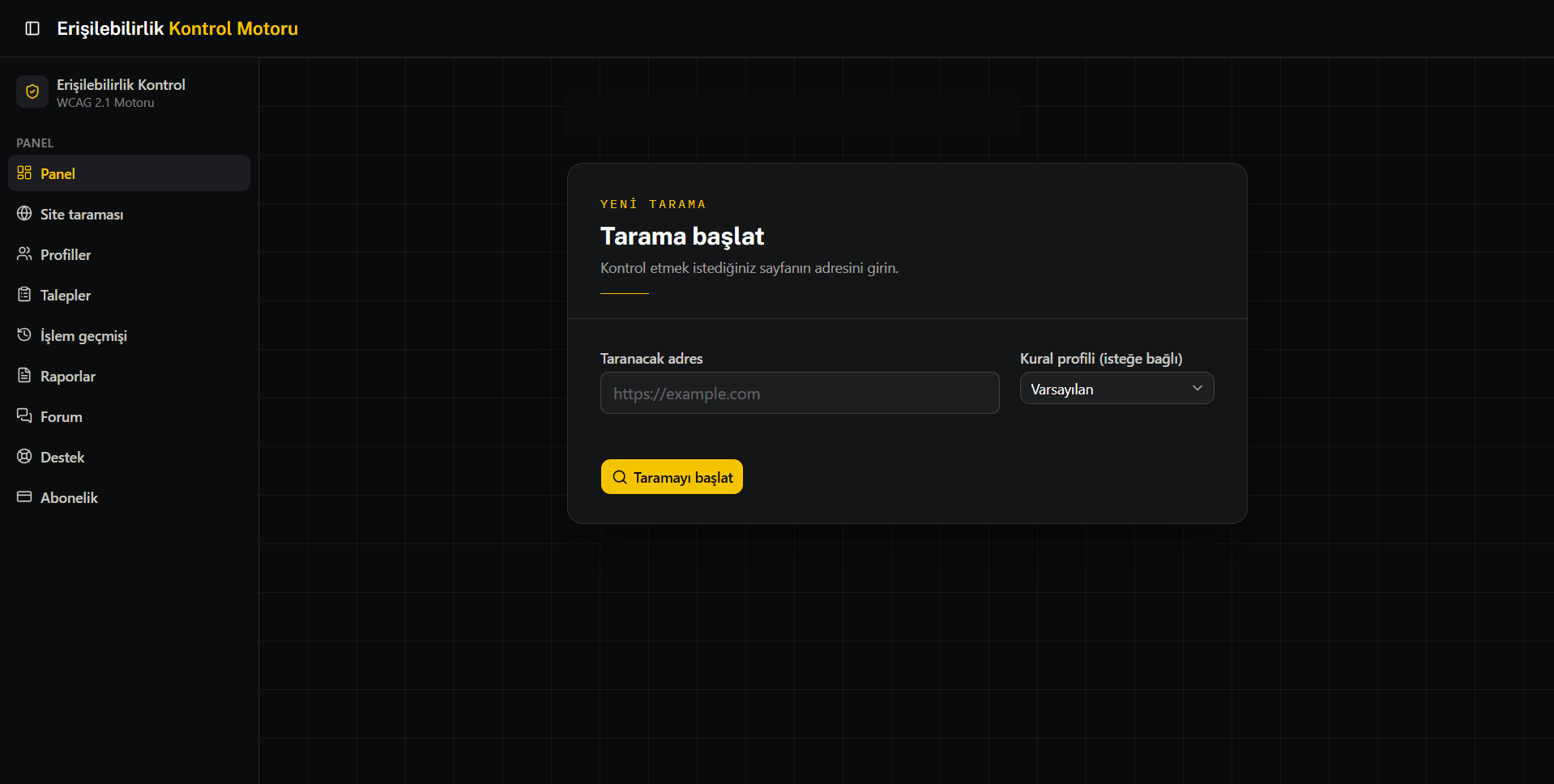
Start scan
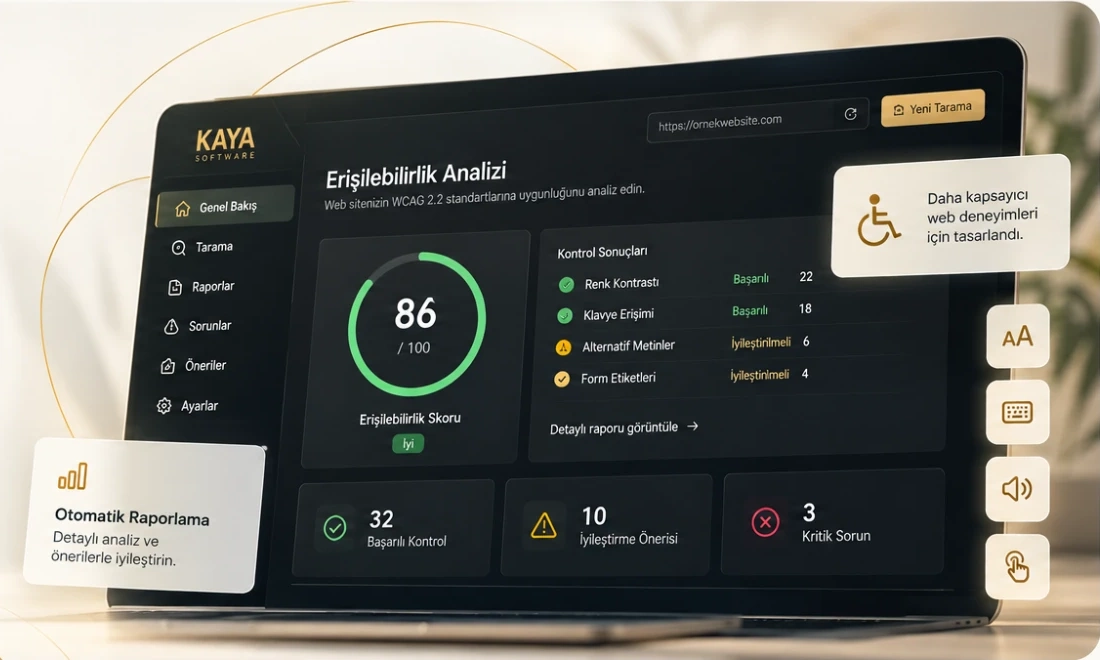
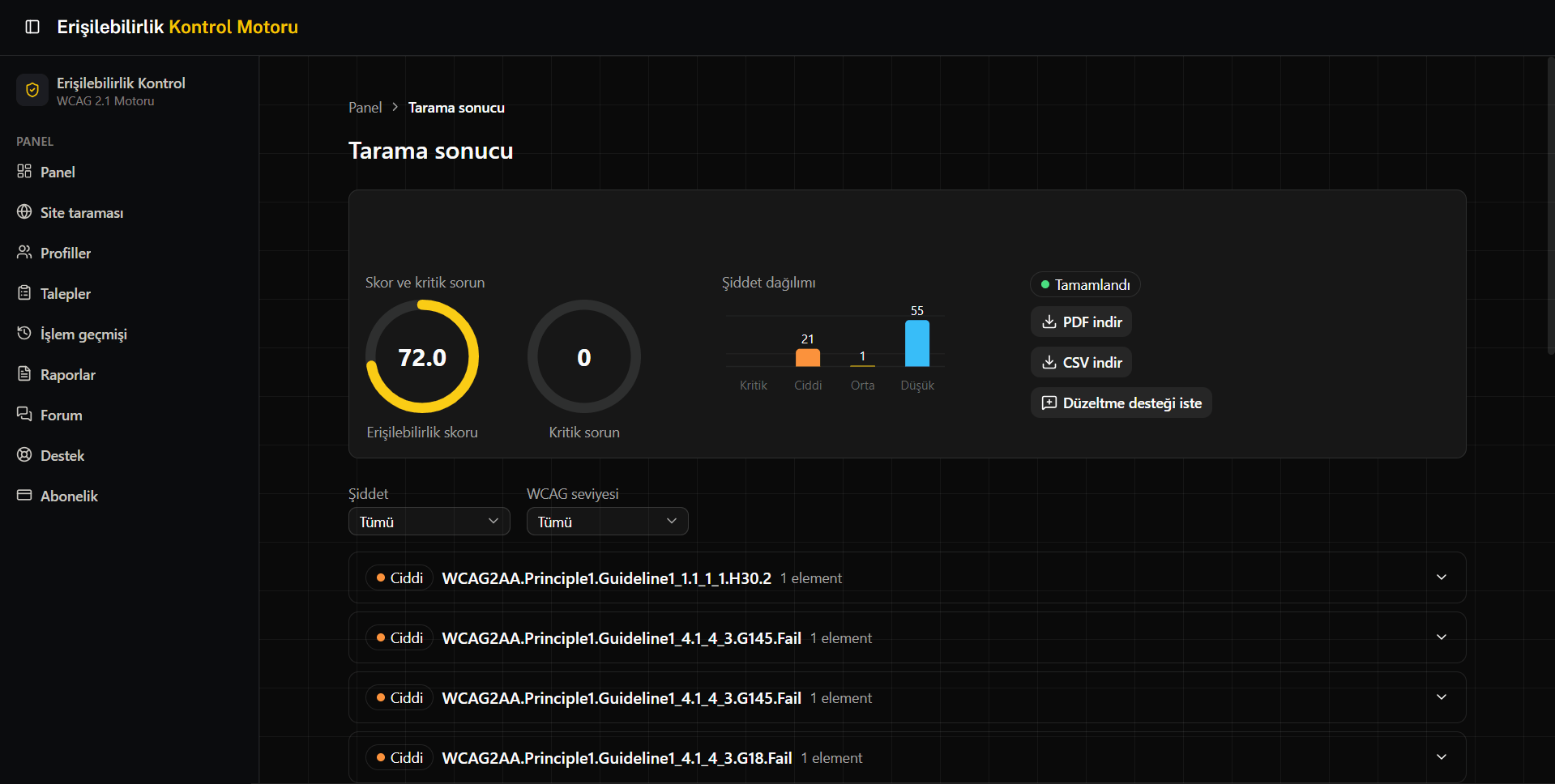
Scan result
Accessibility, comes last in most systems. We start with it.
That's why we build accessibility first; our ERP, CRM, and automation solutions rise on that foundation. Explore the scope, features, and use cases of each one below.
Our products & services
Usable for everyone.
Accessibility is the first decision that shapes how every system after it will be designed.
Accessibility
Who it's for: public-sector, e-commerce and enterprise web teams with a legal WCAG obligation, or losing users to inaccessibility.
We bring your systems up to the WCAG standard — treating it not as a pre-launch checkbox, but as the first criterion in every research, design, content, and development decision. A dedicated accessibility test team checks every release with a real screen reader and keyboard navigation; only releases that pass go live.
Who it's for: SMEs and enterprise teams slowed by Excel and disconnected tools, moving from one branch to many.
Bring production, inventory, and financial data together in one accessible decision center; with e-invoice integration and role-based access, every team sees only the data relevant to their job, and revenue/expenses are tracked live without waiting for a separate report.
Who it's for: sales teams whose quotes and customer history are scattered, who can't see where the funnel leaks.
Turn your sales, quote, and support history into a shared customer memory the whole team can understand and use; quotes are notified instantly over WhatsApp, and where your sales pipeline is stalling becomes visible in the analytics panel.
Who it's for: operations teams repeating the same report, invoice and data entry by hand every day.
Turn repetitive work into traceable flows while keeping error, notification, and intervention points visible; reports are generated automatically, invoice processing completes via payment integration without human intervention, and the team is notified instantly if something goes wrong.
KayaSoft ERP brings production, inventory, and invoicing processes into one panel actively used by real businesses today. The system is live in service, and our team keeps developing it alongside real needs from the field. Click a screen to see it in full.
Wondering what KayaSoft ERP looks like? Here are a few screens showing how it works.
No. The transition is planned in phases; the new system runs in parallel while the team is onboarded gradually. Critical processes — invoicing, inventory, customer records — continue without interruption at every step. The go-live date is planned around your business calendar, with full acceptance testing beforehand.
In most cases, yes. During discovery we review the API, file-transfer, and data-model capabilities of your existing systems. We keep the parts that don't need to change and connect the disconnected points with secure integrations. If a system is too old or too closed to integrate, we say so clearly during discovery.
It doesn't end at delivery. After launch, bug tracking, monitoring, and improvement stay active. Critical issues are prioritized, and user feedback is evaluated. New needs are turned into planned releases without breaking the existing architecture — whatever changes in the field, the system keeps pace.